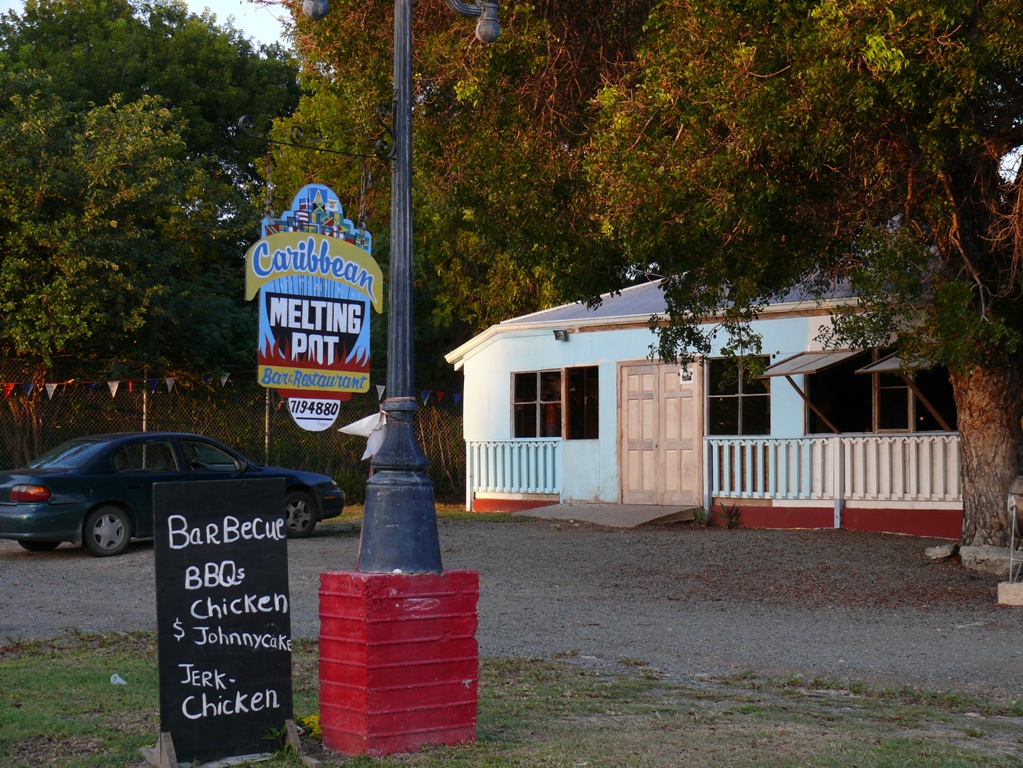
 The Division of Licensing and Consumer Affairs has given Frederiksted area club and restaurant Caribbean Melting Pot a cease and desist order, telling the club to stop operating as a night club, among other directives.
Located a block from the VIPD headquarters at Mars Hill, the Melting Pot is a long-established bar and restaurant. In recent months, it began also operating as a night club on weekends, with large crowds gathering and loud music playing. As the result of a large volume of complaints received from neighboring residents and other consumers, numerous inspections were conducted by the Enforcement Division of DLCA, according to a release from the division.
Citations for violations of licensing laws and provisions of the Noise Pollution Act had been issued on several occasions.
When the loud club nights did not stop and complaints continued to come in, DLCA filed an administrative complaint for noncompliance and administrative hearings were scheduled.
On Dec. 7, DLCA issued its cease and desist order, shutting the place until it is in compliance. The order tells the establishment to stop operating as a night club, which is out of the scope of its Tavernkeeper “A” license, which permits a business to run a bar but not a nightclub. The difference between the two designations is primarily that a nightclub has regular live entertainment: bands, dancers, and so forth.
Caribbean Melting Pot must also pay its past DLCA citations totaling $7,000 before it reopens, according to the DLCA statement.
In an interview in November, DLCA Commissioner Wayne Biggs said DLCA will be gradually beefing up enforcement of licensing rules, to help reduced the nuisance and crime problems associated with excessively loud, late-night clubs.
"We will be working on education first, visiting businesses and talking with them about the regulations," Biggs said. The goal is not to shut down any businesses, if that can be avoided, he said. DLCA will try to first work with businesses to bring them into compliance, then if initial efforts are not successful, strictly enforce license requirements and cite, fine and as a final resort, shut down businesses that do not comply, he said.
Where feasible, a recently enacted noise ordinance will be enforced. Because of the way the language of the statute is written, some of the requirements are ambiguous and difficult to enforce, he said. For instance, while a maximum noise level is specified, how and where the volume is to be measured is left undefined, which makes enforcement actions difficult to defend in court. However, rules requiring all bars within 500 feet of a church, school or residential area to be enclosed and soundproofed are well defined and will be strictly enforced, he said.
Meanwhile, DLCA is asking the Legislature to amend the statute to clarify the ambiguously defined terms, he said.
Businesses in the territory must have a current business license from the Department of Licensing and Consumer Affairs that is pertinent to the type of operation. They must also adhere with all licensing, noise pollution and other statutes, rules or regulations in order to remain in good standing. DLCA enforcement, with the help of the V.I. Police Department, will be out in full force during the holiday season to ensure compliance, according to the DLCA statement.