How the possible federal government sequester will impact V.I. National Park remains unknown, but there will be ramifications, Acting Park Superintendent Mike Anderson said Wednesday at a press conference. Anderson wouldn’t comment further because he said that’s how the National Park Service wants to handle the matter. Instead, he referred questions to Park Service spokesman Jeffrey G. Olson.
“It’s such a delicate issue,” Anderson said.
The sequester, which includes the across-the-board cuts to defense and nondefense discretionary spending, will happen March 1 if the U.S. Congress and the White House can’t agree on a plan to reduce the deficit.
A memo from National Park Service Director Jon Jarvis to all park officials obtained by the Source indicates that, for starters, all national park budgets will be cut by 5 percent.
Olson provided a prepared statement that covered everything from impact on park to impact on the surrounding community.
“Local communities and businesses that rely on recreation to support their livelihoods would face a loss of income from reduced visitation to national parks. Some 280 million people visit national parks each year and their spending alone supports 247,000 jobs and a $31 billion economic impact, mostly in local economies,” he said.
Friends of the Park President Joe Kessler provided figures from a 2004 study that showed the park’s economic impact on the community. He said the park’s presence pumps $123 million into the territory’s economy and helps create 2,400 jobs.
“I think those figures were low,” Kessler said.
Olson said the public should be prepared for reduced hours and services and reduced hours of operation for visitor centers, shorter seasons, and possibly closing of camping, hiking and other recreational areas when there is insufficient staff to ensure the protection of visitors, employees, and historic, cultural and natural resources.
Olson’s comments reflect the fact that the majority of the nation’s 398 parks, monuments and other sites attract the most visitors during the summer, but the national park on St. John and the ones on St. Croix are currently at the very peak of their busiest time of year.
Olson said the reductions would limit the National Park Service’s ability to sustain a full complement of seasonal employees needed for interpretive programs, maintenance, law enforcement and other visitor services.
In the information obtained by the Source, Jarvis instructed parks to delay permanent hiring, to eliminate nonessential costs like travel and training, to eliminate seasonal staff not essential to protecting visitor and resource safety and to avoid hiring seasonal staff not essential for this purpose.
Parks should extend furlough periods for staff subject to furlough and, if more cuts are needed, they should then furlough permanent and term employees.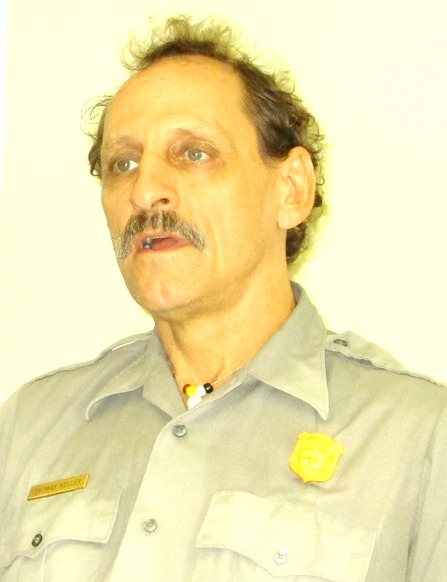
Anderson and the park’s natural resource manager, Thomas Kelley, called the press conference to get the word out about the current mooring and anchoring rules included in the “Superintendent’s Compendium,” a document issued yearly that outlines the rules under which the park operates. The latest version was issued Wednesday.
The park has about 200 moorings in place for boats 60 feet and less for use in day and overnight anchoring. Those have been in place for numerous years, but the park recently installed 13 in the park and one in Virgin Islands Coral Reef National Monument for boats up to 100 feet. While those big boats can stay overnight on moorings in the park, no overnight mooring or anchoring is allowed in the monument.
Anderson said it’s rare that a boater can’t find an available mooring, but should that happen they must head for another bay. Smaller boats can pick up a mooring designated for the larger boats, but should a bigger one show up, they’ll need to get off that mooring.
Boats 101 to 125 feet may anchor at designated anchorages at Lind Point and Francis Bay. Those 126 feet to 210 feet are limited to anchoring at the designated spot in Francis Bay. Those are areas where those vessels will do the least damage.
Boats 60 feet and under are allowed to anchor for three hours only along the Cruz Bay shoreline near the old seaplane ramp. This part of Cruz Bay is within the park’s boundaries.
“There is no anchoring on reefs or sea grass beds,” Kelley said.
Whether you’re on a mooring or anchored, any overnight stays in park waters require the payment of a $15 fee to be deposited in the collection sites placed at the bays. Kelley said a move is in the works to increase the fees but that will take about a year to implement.
“The purpose of the fees is for maintenance and research on sea grass protection,” Anderson said.
Day visits by boats are free.
The park has no current statistics on how many boats visit the territory, but Kelley said in the mid-1990s, vessels made 30,000 visits a year to the park. Each day a boat was in the park counts as one visit.
The park recently implemented a rule that prohibits smoking at beaches, and Anderson said containers for people to deposit their butts are ordered and will be placed at Hawksnest, Trunk and Cinnamon Bays. He said temporary signs announcing the ban are up at some locations but permanent ones are on order.
Lloyd Morris, the park’s enforcement chief, said park rangers are not currently issuing tickets to people caught smoking at the beaches.
“We are advising folks,” Morris said.
Anderson said he expects the Superintendent’s Compendium to be available on the park’s website, www.nps.gov/viis, in the near future.
For more information on mooring and anchoring in park waters, call the park at 776-6201.