
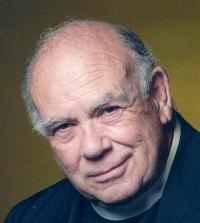
The note was penciled on a torn piece of paper with mud and blood on it. It was written by Roy Black.
Let me tell you about Roy.
Growing up on the cusp of the Great Depression in the less-than-dynamic dust bowl metropolis of Altus, Oklahoma, his family was not among the well-to-do. But they were a deeply religious family, and teen-age Roy knew he had to be a preacher.
We met in the 1950’s when he enrolled in a course I taught at a Midwestern theological seminary. An exceptionally good student with a ravenous mind, Roy read Kierkegaard for fun! His only academic problem was, his spelling was terrible!
Baptists in some places do not require their clergy to complete seminary before ordination. Pastor of a small town congregation in the boonies of north Missouri, Roy commuted to seminary classes in the big city, and sometimes spent the night at our house when late hours at the library made it impractical to drive home. Those nights we talked. Our families became close friends.
Soft-spoken, phlegmatic, he wouldn’t get excited to see a herd of elephants fly over the Missouri river. And like still water, Roy ran deep.
We shared with each other the unsettling uncertainties about our belief in the dogmatics of the denomination to which we both belonged. He decided he could not stay in that fold, even before I did. I introduced him to my friend, an Episcopal priest. Roy was hooked!
The Episcopal Church was a good fit. He served the West Missouri parish to which Bess Truman belonged. Through her he had occasional contacts with the former president, but spoke of this only to close friends.
His never-still mind drew him repeatedly to academia. He earned a doctorate: two, actually. He got someone to correct the spelling on his papers and dissertations.
He also played a few musical instruments and was named to the Country Music Hall Of Fame, a distinction he self-disparagingly dismissed.
He was never a rah-rah kind of guy about anything, but love of his country; genuine, deep, and strong ran in his Okie soul. He joined the U.S. Navy as a Chaplain. Between two tours in Vietnam, he presided over military funerals at Arlington National Cemetery.
In Nam he was assigned to the Marines. Not a quiet chapel job.
Over the years we continued corresponding, including during his deadly, dirty, damnable days in the jungles of Southeast Asia. In some of his letters he wrote of things he could not, dared not, say to anyone else. He still couldn’t spell, but the letters are riveting.
A mud-and-blood-spattered one was scribbled while he was pinned down by Viet Cong sniper fire in some horrid swamp. The blood belonged to a mortally wounded Marine to whom Roy snaked on his belly so he could hold the kid as he died. He did that several times that day, scores of times that awful year. He always hand-wrote a letter to each grieving family. None of them complained about his spelling.
Never much impressed with rank or authority, he had several run-ins with one particular commanding officer whose mental gyroscope was clearly going wobbly. The Colonel cited Roy for insubordination and initiated paper work to have him court martialed.
After a particularly heinous order which sent a Marine to his death sweeping a minefield with no training in how to do it, Roy went over the CO’s head and demanded an investigation. Higher-ups determined the Colonel was indeed unfit and relieved him of command, an extreme and unusual action.
But in the mysterious ways of the military, the Colonel’s bad fitness reports were never reviewed or expunged from Roy’s record, and his career was stuck. Although several times in the zone for promotion to Commander, he never received one. That hurt, but Roy didn’t obsess about it.
Vietnam left a deep, dark, never-healing wound on Roy’s spirit, as it did on thousands of others. He bore it well, but those close to him knew it was always there.
Post-Nam he traded camouflaged combat fatigues for a round white collar and took over one of the little parishes he loved, this one in DeRidder Louisiana. From there the phone call came: “The doc says I have cancer”.
I said I would visit him, but he replied, “Don’t rush, this thing’s slow-growing; I’ll be around a while.”
But slow abruptly turned to fast, and a phone call from his wife told me he was in hospital, comatose. He never woke up.
I cherish the remarkable friendship we had. And the bundle of letters with terrible spelling.
Roy Willis Black: RIP
Editor’s note: Jack Wilson is an Episcopal priest who may be reached at [email protected]
© FlatVeritas